Finding an authentic organic farm in Chennai has become a primary objective for health-conscious families who want to protect their households from synthetic pesticide residues. However, with numerous retail brands marketing packaged vegetables under generic organic labels, consumers face confusion about where their food is truly grown.
At Eshcol Organic Farm, our experience growing crops in Thiruvallur has taught us that real farming integrity does not rely on promotional branding. It relies on living soil health, observable pest management routines, and open community communication. Below is a practical verification framework Chennai residents can use when evaluating any organic farm.
1. Verify the Physical Cultivation Location
Many commercial vendors selling organic vegetables Chennai do not cultivate crops themselves. Instead, they operate as aggregators purchasing surplus produce from disparate wholesale markets where growing conditions cannot be audited.
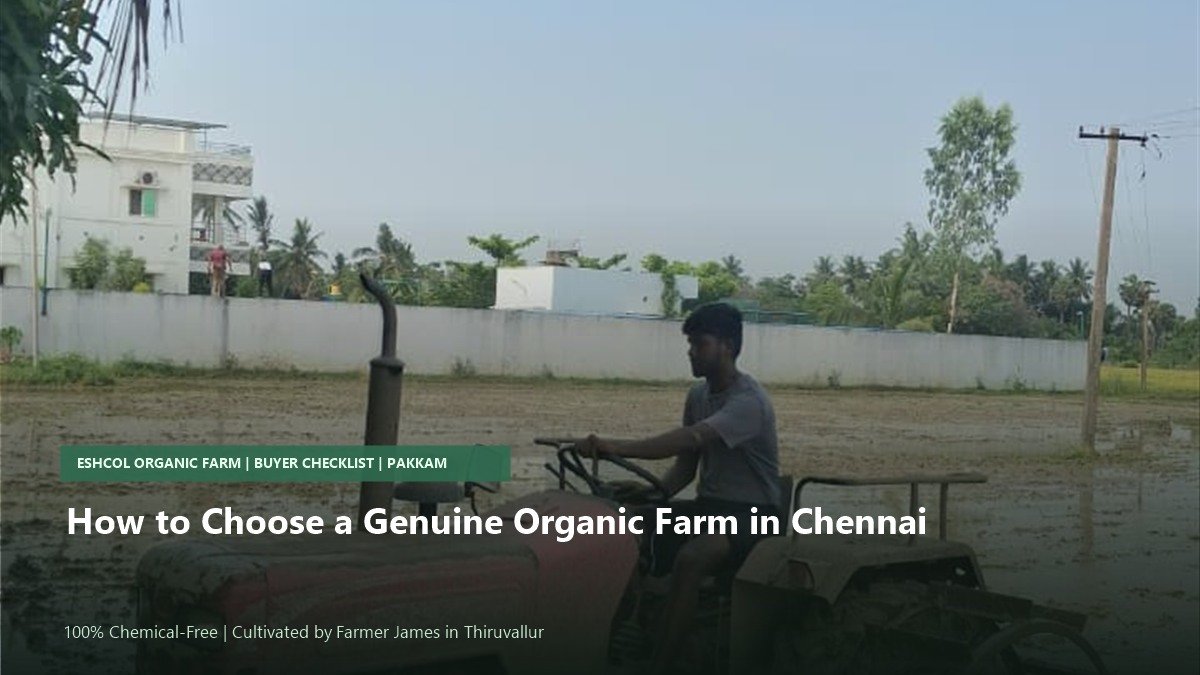
When evaluating a farm, ask for the exact village or taluk where the fields are situated. For example, our farm operates in the agricultural district of Thiruvallur, which borders Chennai. This specific proximity ensures vegetables are harvested early in the morning and reach Chennai neighborhoods within hours, avoiding long transit in non-refrigerated trucks.
2. Inquire About Soil Nutrition and Pest Management
Chemical-free agriculture begins below the surface. Synthetic farming relies on quick chemical injections like urea and synthetic diammonium phosphate (DAP), which damage soil microorganisms over time.
Ask the farm how they enrich their soil:
- Do they utilize cow dung compost, farmyard manure, or vermicompost?
- Are cover crops or green manures planted between seasons to restore natural nitrogen?
- How do they manage insect infestations without synthetic organophosphates or pyrethroids?
A genuine grower will explain their botanical sprays, such as neem-seed kernel extracts or companion border plantings like marigolds that deter nematode pests naturally.
3. Check for Direct Field Visit Access
The most reliable proof of chemical-free agriculture is welcoming visitors to inspect the land. Farms with nothing to conceal encourage customers to see the fields, observe irrigation sources, and inspect compost pits firsthand.
We host educational farm visits for families, students, and gardening enthusiasts. Walking through our crop rows in Thiruvallur allows visitors to see natural biodiversity, earthworms in the soil, and ladybug predators managing aphid populations.
Comparison Checklist for Chennai Buyers
| Verification Criterion | Transparent Organic Farm | Generic Retail Aggregator |
|---|---|---|
| Farm Address | Named village and accessible field location (e.g. Thiruvallur). | Vague central warehouse or undisclosed sourcing partners. |
| Pest Control Strategy | Botanical herbal extracts, trap crops, and predator insects. | Relies on third-party supplier statements without audits. |
| Seasonal Produce Selection | Only seasonal crops that grow naturally in current weather. | Supplies every off-season vegetable year-round from cold storage. |
| Visitor Policy | Open for scheduled customer field tours and learning. | Closed commercial facility with no public access. |
Frequently Asked Questions
How do I know if an organic farm in Chennai is genuine?
Confirm that the farm has a verifiable physical cultivation site, can clearly name its biological soil inputs, and invites customers to visit the land in person.
Can natural vegetables look different from supermarket vegetables?
Yes. Chemical-free vegetables naturally display variations in size and shape because they are not treated with synthetic growth hormones or synthetic cosmetic waxes.