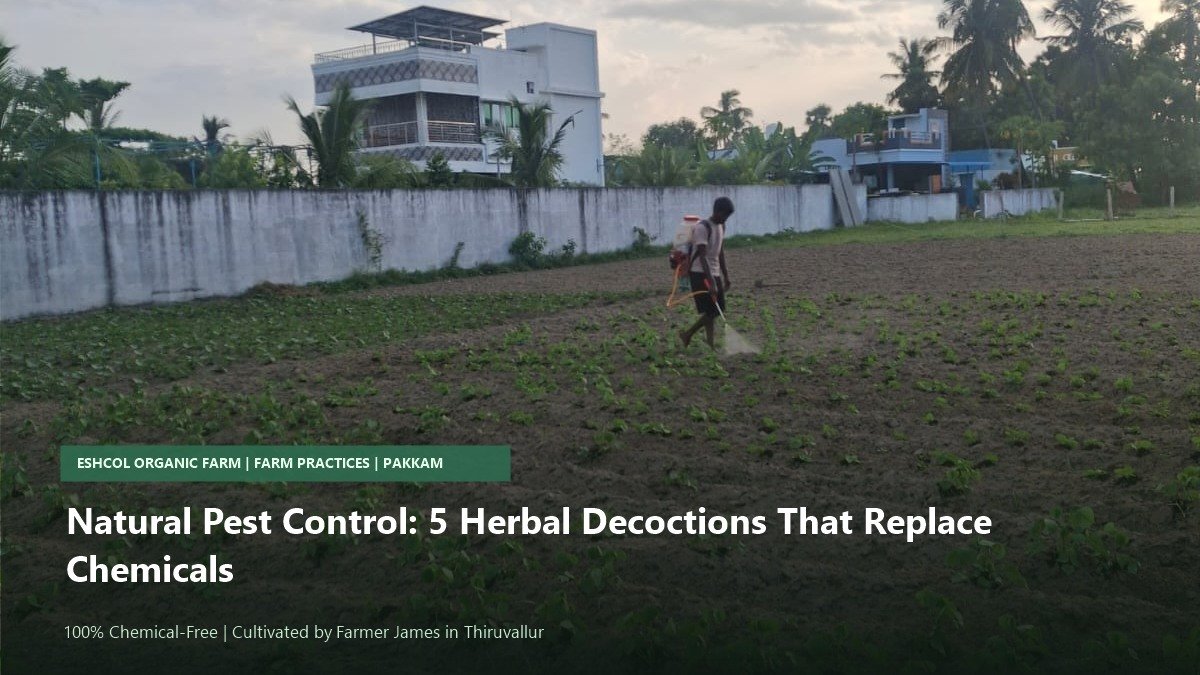
One of the most frequent questions Chennai consumers ask is: "If you do not spray chemical pesticides, how do you prevent insects from eating all your vegetables?" The answer lies in natural pest management organic farm systems that work with nature rather than attempting to sterilize the ecosystem.
At Eshcol Organic Farm, Farmer James uses biological pest regulation strategies in our Thiruvallur fields. Here are the core methods we use to keep crops healthy without synthetic chemical sprays.
1. The Myth of Total Insect Eradication
Conventional agriculture treats every insect as an enemy to be killed with toxic chemical sprays. However, spraying broad-spectrum insecticides kills beneficial predator insects alongside target pests. Pests rapidly develop resistance, leading to stronger chemical applications. Natural farming aims for balanced equilibrium: keeping pest populations below economic injury thresholds while supporting natural insect predators.
2. Companion and Border Trap Crop Planting
We deliberately plant specific botanical varieties around our vegetable beds:
- Marigolds: Planted along tomato and brinjal borders. Their root exudates suppress soil-borne nematodes, and their bright yellow flowers attract beneficial pollinators and hoverflies.
- Castor and Mustard: Function as trap crops. Caterpillar pests prefer laying eggs on castor leaves, sparing our adjacent vegetable crops.
- Aromatic Herbs: Basil and coriander mask vegetable scents, disorienting flying moth pests.
3. Botanical Herbal Sprays
When pest numbers rise, we utilize non-toxic botanical preparations made from traditional herbs:
- Neem Seed Kernel Extract (NSKE): Contains natural azadirachtin, which disrupts pest feeding cycles without harming earthworms or honeybees.
- Five-Leaf Botanical Extract (Aindhilai Karisal): A fermented combination of neem, calotropis (erukku), adhatoda, custard apple, and papaya leaves that repels chewing pests naturally.
Pest Management Strategies Compared
| Strategy | Natural Ecological Management | Synthetic Chemical Spraying |
|---|---|---|
| Target | Maintains biological balance below damage levels. | Attempts complete eradication, destroying beneficials. |
| Residue Impact | Biodegradable plant extracts with zero toxic residues. | Chemical residues that persist on harvested produce. |
| Beneficial Predators | Protects dragonflies, ladybugs, spiders, and birds. | Decimates non-target beneficial insect populations. |
Frequently Asked Questions
Do botanical sprays leave harmful residues on vegetables?
No. Natural herbal extracts such as neem degrade naturally under sunlight within 48 to 72 hours, leaving no toxic synthetic chemical residues.
Can I learn how to make natural herbal sprays for my terrace garden?
Yes. Farmer James demonstrates botanical preparation during our educational farm visits in Thiruvallur.