Rice is the daily foundation of South Indian meals. However, modern commercial paddy farming relies heavily on synthetic urea and chemical insecticides, followed by chemical fumigation in storage warehouses. For households looking for organic rice Chennai, switching to naturally grown staple grains provides immediate nutritional benefits.
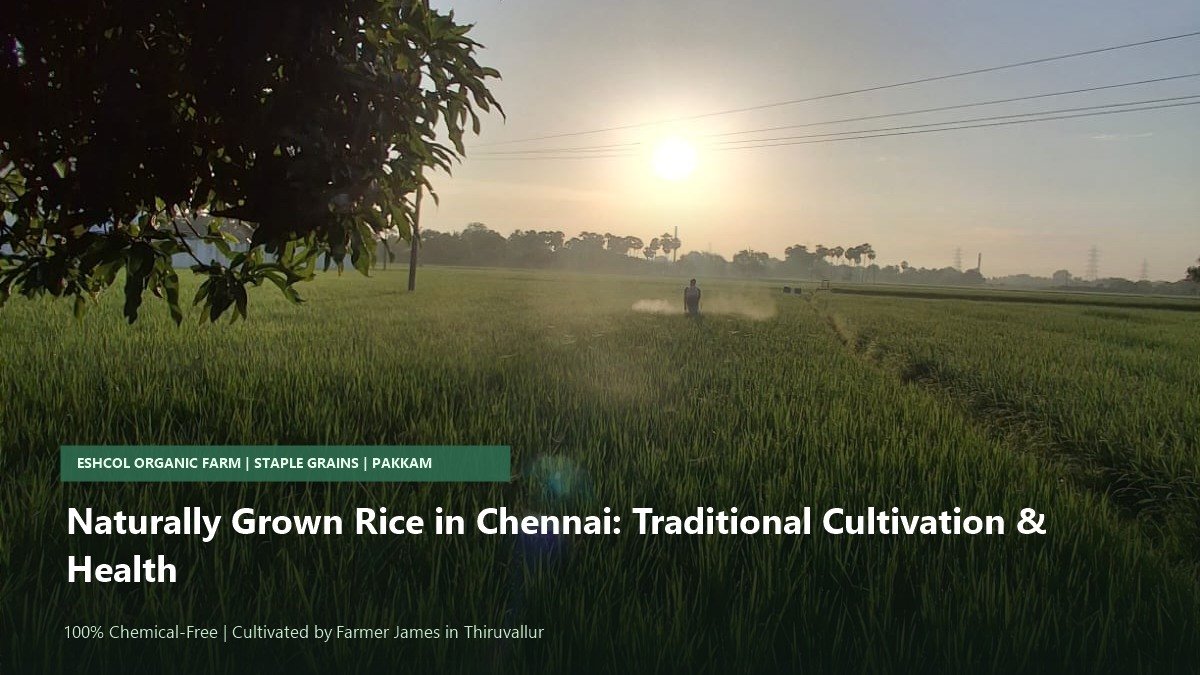
At Eshcol Organic Farm, we grow paddy in our Thiruvallur fields using time-tested biological practices. Here is what makes naturally grown rice distinctly different from conventional supermarket rice.
1. Biological Soil Nutrition Over Synthetic Urea
In conventional paddy agriculture, synthetic urea forces rapid vegetative expansion. This creates soft plant tissues that attract stem borers and leaf folders, requiring heavy chemical sprays. In natural farming, we feed the soil using farmyard manure, compost, and green leaf additions such as dhaincha. This encourages steady tillering, strong root anchorage, and naturally resilient stalks.
2. Preserving Traditional Grain Varieties
Modern hybrid rice strains are bred primarily for high yield under chemical regimes. In contrast, traditional Tamil Nadu paddy varieties have evolved over centuries to thrive in local soil and climate conditions. Varieties such as Mappillai Samba, Karuppu Kavuni, and traditional raw rice provide high dietary fiber, iron, zinc, and a lower glycemic response compared to ultra-polished white rice.
3. Zero Post-Harvest Chemical Fumigation
Many consumers do not realize that chemical contamination often occurs after harvest. Large commercial warehouses routinely fumigate grain bags with methyl bromide or phosphine tablets to prevent weevil infestations. Naturally grown rice from our farm is batch-milled and sun-dried, relying on clean storage containers without chemical gas fumigation.
Comparing Naturally Grown Rice vs Conventional White Rice
| Factor | Naturally Grown Farm Rice | Commercial Supermarket Rice |
|---|---|---|
| Field Fertilizer | Farmyard manure, compost, and biological inputs. | Synthetic urea and chemical diammonium phosphate. |
| Storage Protection | Sun-drying and physical grain cleaning. | Chemical gaseous fumigation in mass storage. |
| Nutrient Retention | Bran layer and germ preserved in natural unpolished grains. | Bran stripped away through multiple polishing rounds. |
Frequently Asked Questions
Why does naturally grown rice cook differently?
Because traditional and chemical-free rice retains its natural bran coat, it requires slightly more soaking time (typically 30 to 60 minutes) before cooking, resulting in a rich texture and distinct earthy aroma.
Where can I source chemical-free rice in Chennai?
You can inquire directly with our farm through our contact page to check current harvest batches harvested in Thiruvallur.