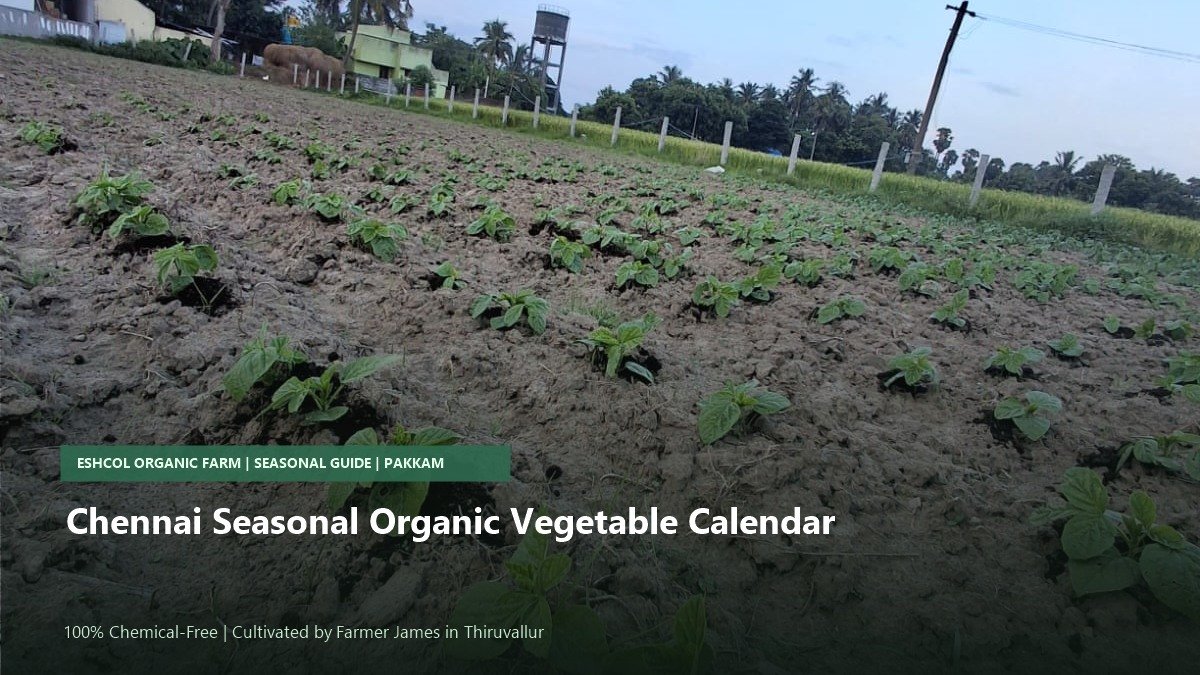
Eating seasonally is one of the foundational rules of organic food. When consumers demand vegetables out of their natural growing season, commercial growers rely on heavy synthetic chemical sprays and plastic greenhousing to keep plants alive in hostile temperatures. Knowing the seasonal organic vegetables Chennai calendar helps you choose fresh, nutrient-packed food year-round.
At Eshcol Organic Farm, our planting cycles in Thiruvallur follow the rhythm of the monsoons and sunshine. Below is a practical seasonal guide for Chennai households.
1. Summer Season (March to June)
During peak heat in coastal Tamil Nadu, natural farming focuses on deep-rooted, moisture-resilient native crops:
- Native Gourds: Ridge gourd (peerkangai), bottle gourd (sorakkay), snake gourd (pudalangai), and ash gourd (poosanikai).
- Warm-Season Pods: Okra (ladies finger) and cluster beans (kothavarangai).
- Hardy Greens: Agathi keerai and ponnanganni keerai that withstand heat without bolting.
2. Monsoon Season (July to October)
The arrival of the Southwest monsoon cools the soil and initiates fresh sowing cycles:
- Fruiting Vegetables: Country tomatoes, local brinjals (kathirikai), and bitter gourds (pavakkai).
- Field Pods: Yardlong beans (karamani) and flat broad beans (avarakkai).
- Foliage Crops: Siru keerai, arai keerai, and palak grown in well-drained beds.
3. Post-Monsoon & Winter (November to February)
The cooler winter months following the Northeast monsoon produce the widest diversity of chemical-free vegetables:
- Root Vegetables: Fresh country radish (mullangi), carrots, and native sweet potatoes.
- Bush Crops: Bush beans, capsicum, cabbage, and seasonal drumsticks (murungai).
- Rich Greens: Vendhaya keerai (fenugreek leaves) and pulicha keerai.
Seasonal Harvest Calendar at a Glance
| Season | Months | Natural Peak Crops |
|---|---|---|
| Summer | March to June | Bottle gourd, ridge gourd, ash gourd, okra, cluster beans. |
| Monsoon | July to October | Country tomatoes, native brinjals, long beans, seasonal leafy greens. |
| Winter | November to February | Radish, carrots, flat beans, drumsticks, drumstick leaves, fenugreek greens. |
Frequently Asked Questions
Why are off-season vegetables more likely to have chemicals?
Crops forced to grow outside their natural temperature and humidity parameters suffer severe insect attacks, prompting commercial farms to apply intensive chemical pesticide cocktails.
How can I stay updated on Eshcol Farm's seasonal produce?
Contact Farmer James through our contact form to receive seasonal harvest updates.