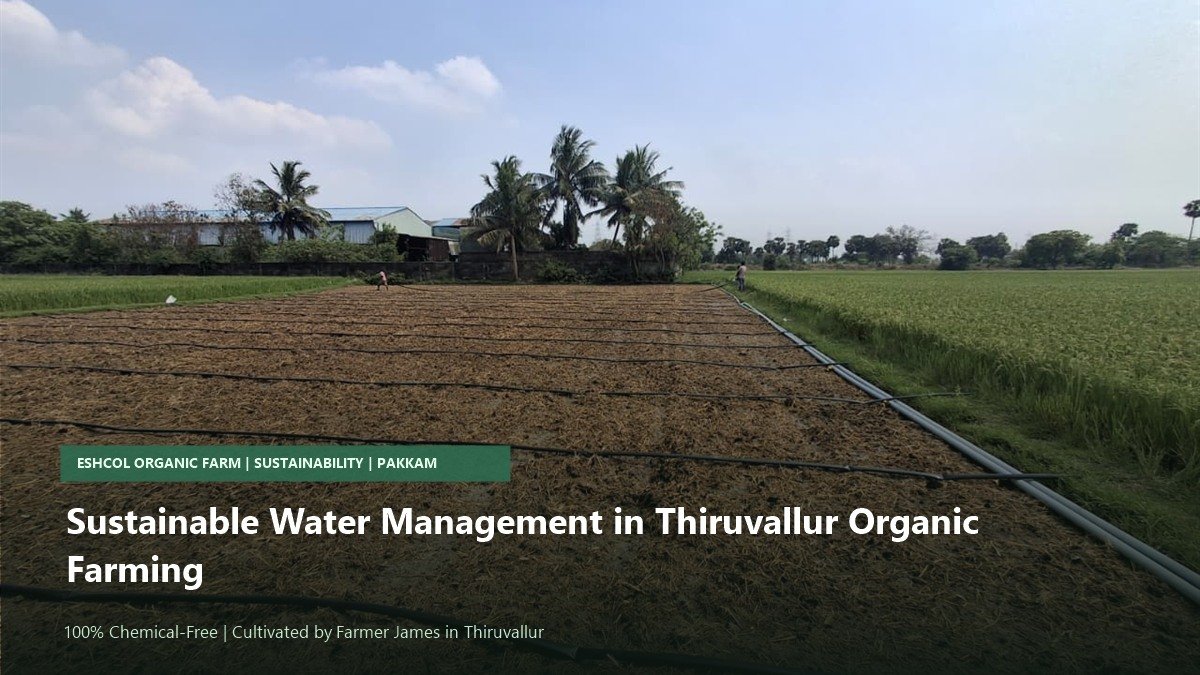
Water security is one of the most critical agricultural issues in Tamil Nadu. The combination of intense summer heat and monsoon reliance requires intelligent, conservation-focused farming. For growers practicing sustainable organic farming Thiruvallur, protecting and recharging groundwater is a core ecological responsibility.
At Eshcol Organic Farm, Farmer James manages irrigation through sustainable soil science and water harvesting techniques. Here is how our farm conserves every drop of water.
1. Organic Mulching: Eliminating Evaporation
Leaving bare soil exposed to the blazing sun causes rapid surface water evaporation and forms a hard soil crust. At Eshcol Farm, we keep crop beds covered with dry leaves, straw, and coconut coir waste. This protective mulch blanket reduces surface soil temperatures by 6 to 10 degrees Celsius, cutting water loss by over 40% and keeping root zones moist between irrigation cycles.
2. Increasing Soil Organic Matter as a Biological Sponge
Sandy or chemical-degraded soil allows water to run straight through without being absorbed. By continuously incorporating compost, farmyard manure, and vermicompost, our living soil develops high organic carbon levels. A high-carbon soil structure acts like a natural sponge, absorbing rainwater and releasing it gradually to plant roots over days.
3. Rainwater Recharge and Farm Ponds
During the Northeast monsoon, torrential rains can either cause soil erosion or recharge underground aquifers. We maintain field bunds and collection channels that direct excess rainwater into recharge pits, helping replenish the water table for our farm and neighboring agricultural communities in Thiruvallur.
Water Conservation Practices Compared
| Practice | Eshcol Farm Sustainable Method | Conventional Flood Irrigation |
|---|---|---|
| Soil Surface | Protected with biological mulch layers. | Bare soil exposed to high evaporation and sun baking. |
| Soil Sponge Effect | High organic carbon holds moisture for days. | Low organic matter requires frequent, heavy flooding. |
| Monsoon Capture | Rainwater channeled into groundwater recharge pits. | High runoff carrying topsoil and chemicals away. |
Frequently Asked Questions
How does mulching save irrigation water in organic farming?
Mulch forms an insulating barrier that shields topsoil from solar radiation and wind, keeping soil damp and reducing the need for daily pumping.
Can visitors see your water harvesting setup?
Yes. Water harvesting and mulching are central highlights of our educational farm visits in Thiruvallur.