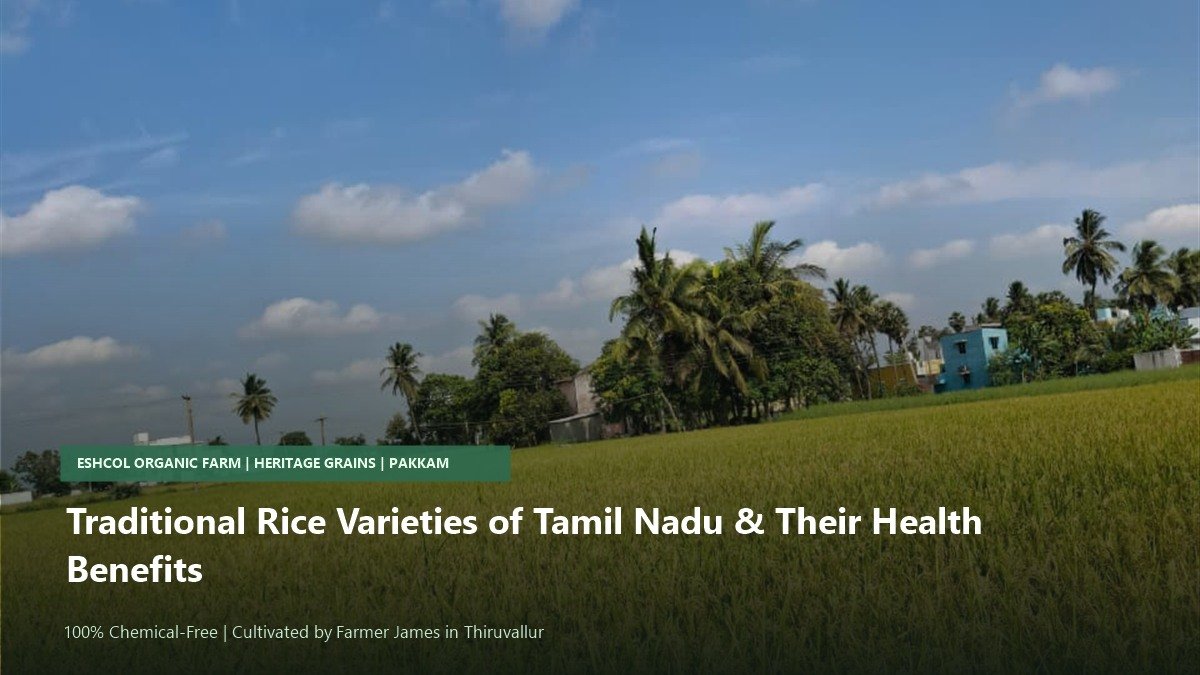
Tamil Nadu has one of the world's most sophisticated indigenous grain heritages, historically cultivating hundreds of specialized paddy varieties adapted to local microclimates. Today, as Chennai households rediscover the health advantages of unpolished heirloom grains, traditional rice varieties Tamil Nadu are reclaiming their rightful place on family dining tables.
At Eshcol Organic Farm, we grow and promote naturally cultivated native paddy varieties in Thiruvallur. Here is a guide to the most prominent traditional varieties and their dietary benefits.
1. Mappillai Samba: Stamina and Iron
Mappillai Samba (Bridegroom Rice) is a red-kernel heirloom variety celebrated for supporting physical stamina and hemoglobin levels. It is naturally rich in dietary iron, zinc, and complex starches that digest slowly, helping maintain even blood sugar levels.
2. Karuppu Kavuni: The Emperor's Black Rice
Karuppu Kavuni is an ancient black rice variety loaded with anthocyanin antioxidants, the same protective compounds found in blueberries. It provides high protein, substantial dietary fiber, and strong anti-inflammatory properties, making it an exceptional grain for traditional porridge (kanji) and steamed delicacies.
3. Seeraga Samba: Fragrance and Digestion
Seeraga Samba features small, oval grains resembling cumin seeds (seeragam). Renowned as the historic choice for festive South Indian biryanis, it possesses an extraordinary natural aroma while being easy on the digestive tract.
Traditional Rice Varieties at a Glance
| Variety | Grain Color | Key Nutritional Characteristics | Best Cooking Preparation |
|---|---|---|---|
| Mappillai Samba | Reddish Brown | High iron, dietary zinc, and steady energy release. | Table rice, idli/dosa batter, and nutritious kanji. |
| Karuppu Kavuni | Deep Black/Purple | Potent anthocyanin antioxidants and high fiber. | Sweet pongal, medicinal porridge, and traditional puddings. |
| Seeraga Samba | Creamy White/Small | Aromatic essential oils and gentle digestive profile. | Traditional biryani, variety rice, and festive meals. |
Frequently Asked Questions
How should traditional rice be soaked before cooking?
Because traditional varieties retain their nutrient-dense outer bran, soak them for 45 to 90 minutes before boiling or pressure cooking. Use approximately 1 part rice to 2.5 or 3 parts water.
Does Eshcol Farm cultivate traditional rice batches?
Yes. We grow seasonal batches of naturally farmed native rice in our Thiruvallur acreage. Check current availability via our contact page.